

Competition for enrollment of students in the first year of the second and third cycle studies in the academic year 2020/2021
Second and third cycle studies
Competition for the enrollment of students in the second and third cycle studies will be open from 22nd June 2020 to 3rd November 2020, by which time candidates will be able to submit their applications. Information on the ranking of registered candidates, the final ranking list and deadlines for enrollment will be available no later than 6th November 2020 on the websites of faculties/Academy of Arts.
Second cycle - required documentation:
Candidates should submit the following documentation to the Office 409 of the Faculty of Economics:
- Original or certified copy of the diploma of completed four-year higher education;
- Completed application form for the second cycle studies;
- Birth certificate;
- Certificate of citizenship not older than six months;
- Certified curriculum of the first cycle studies and a certificate of passed exams (if the candidate studied at another faculty);
- Proof of payment of fees for technical services and direct material costs. Payment instructions can be taken over at Office 409 or downloaded here.
Candidates should submit the following documentation to the Office 409:
- Certified copy of diplomas on completion of the first and second cycle studies (with the title of Master of Economics), i.e. certified copy of diplomas of basic and magister studies for students under the old non-Bologna program, that is the equivalence of the title acquired under previously valid regulations equated with the title acquired at the end of the second cycle studies;
- Curriculum and certificate of passed exams of basic and master's studies, i.e. certified copies of the diploma supplement of the first and second cycle (submitted by candidates who have completed basic studies or studies of the first cycle studies at other public and private faculties);
- Completed application form which can be downloaded here;
- Birth certificate;
- Certificate of citizenship;
- Motivation letter of the candidate on studying at the doctoral study which contains narrow scientific areas of interest, proposal of elective subjects and explanation of scientific and theoretical basis of the area of interest for the study of the third cycle studies). The candidate opts for a certain module of doctoral studies, and the doctoral research proposal must correspond to the module for which the candidate has opted;
- Biography and bibliographic data of the candidate (proof of published two scientific papers in the field of research of the selected module of the third cycle studies);
- Proof of payment of the application fee for the competition for enrollment in the third cycle studies.
All additional information can be found on the website of the Faculty of Economics www.ef.unibl.org or by phone +387 (0) 51 430 035.
Published 15.09.2020. у 09:30
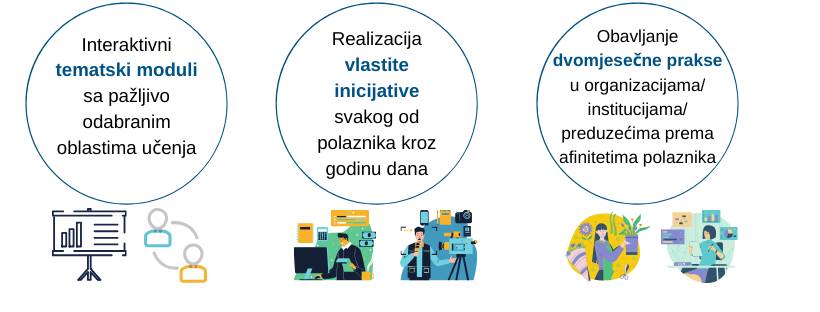
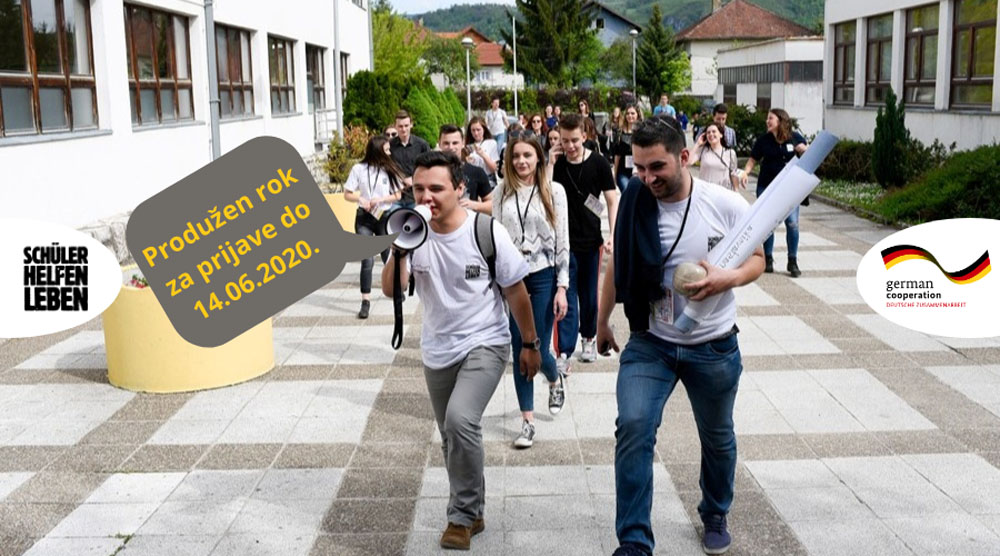
Open invitation of the Academy for Young Leaders in BiH with a paid two-month internship
The SHL Foundation (Schüler Helfen Leben) with the support of the Government of the Federal Republic of Germany is implementing, for the fourth time, a one-year program of the Academy for Young Leaders in Bosnia and Herzegovina intended primarily for students of social sciences (young people aged 19 to 25). Among the programs are, among other things, visits to the most successful domestic and foreign companies operating in BiH, visits to the IMF office and numerous government institutions, but also a two-month paid internship in organizations or companies chosen by the participants.
Published 10.06.2020 at 13:44
Competition for enrollment of students in the first year of the first, second and third cycle studies in the academic year 2020/2021
A competition has been announced for the enrollment of students in the first year of the first, second and third cycle studies in the academic year 2020/2021 at public higher education institutions. You can download the text of the competition here.
First cycle studies - first enrollment period
Candidate registration starts on 22nd June 2020, and ends on 26th June 2020 (documents are received every working day).
Taking the entrance exam will be done on 1st July 2020 starting at 9.00 am.
Announcement of the competition results is on 6th July 2020 until 2.00 pm.
Enrollment of accepted candidates begins on 8th July 2020, and ends on 17th July 2020.
First cycle studies - second enrollment period
The second enrollment period will be organized by the faculties/academies that do not enroll the planned number of students in the first period, and according to the following terms: candidate registration starts on 31st August 2020, and ends on 4th September 2020; taking the entrance exam will be done on 7th September 2020 starting at 9.00 am; announcement of the competition results is on 9th September 2020 until 2.00 pm; enrollment of accepted candidates begins on 14th September 2020, and ends on 18th September 2020.
Application form for the enrollment in the first cycle studies at the Faculty of Economics can be downloaded here.
Instructions for payment for technical services and taking the entrance exam can be taken over at the Student services of the Faculty or downloaded here.
Candidates should submit the following documentation to the Student services:
- Completed application form for the first cycle studies
- Original diploma of completed four-year secondary education;
- Original certificates from the first to the fourth grade of high school;
- Birth certificate;
- Certificate of citizenship not older than six months;
- Proof of payment of the fee for taking the entrance exam.
Second and third cycle studies
Competition for the enrollment of students in the second and third cycle studies will be open from 22nd June 2020 to 3rd November 2020, by which time candidates will be able to submit their applications. Information on the ranking of registered candidates, the final ranking list and deadlines for enrollment will be available no later than 6th November 2020 on the websites of faculties/Academy of Arts.
Second cycle - required documentation:
Candidates should submit the following documentation to the Office 409 of the Faculty of Economics:
- Original or certified copy of the diploma of completed four-year higher education;
- Completed application form for the second cycle studies;
- Birth certificate;
- Certificate of citizenship not older than six months;
- Certified curriculum of the first cycle studies and a certificate of passed exams (if the candidate studied at another faculty);
- Proof of payment of fees for technical services and direct material costs. Payment instructions can be taken over at Office 409 or downloaded here.
Candidates should submit the following documentation to the Office 409:
- Certified copy of diplomas on completion of the first and second cycle studies (with the title of Master of Economics), i.e. certified copy of diplomas of basic and magister studies for students under the old non-Bologna program, that is the equivalence of the title acquired under previously valid regulations equated with the title acquired at the end of the second cycle studies;
- Curriculum and certificate of passed exams of basic and master's studies, i.e. certified copies of the diploma supplement of the first and second cycle (submitted by candidates who have completed basic studies or studies of the first cycle studies at other public and private faculties);
- Completed application form which can be downloaded here;
- Birth certificate;
- Certificate of citizenship;
- Motivation letter of the candidate on studying at the doctoral study which contains narrow scientific areas of interest, proposal of elective subjects and explanation of scientific and theoretical basis of the area of interest for the study of the third cycle studies). The candidate opts for a certain module of doctoral studies, and the doctoral research proposal must correspond to the module for which the candidate has opted;
- Biography and bibliographic data of the candidate (proof of published two scientific papers in the field of research of the selected module of the third cycle studies);
- Proof of payment of the application fee for the competition for enrollment in the third cycle studies.
All additional information can be found on the website of the Faculty of Economics www.ef.unibl.org or by phone +387 (0) 51 430 035.
Published 09.06.2020 at 20:03
Why enroll at the Faculty of Economics of the University of Banja Luka?
Watch the video and find out from our students what are the reasons why they enrolled at the Faculty of Economics of the University of Banja Luka and why this is the #sigurnoNajbolji (#surelyBest) choice for your future, too!
Graduated economists are by far the most employable staff and the possibility of employment with this degree is really diverse and there is almost no company, institution or organization that does not need this staff.
Modernized curricula "Economics and Business Management" and the new program "Business Informatics" are #sigurnoNajbolji (#surelyBest) way to provide yourself with a more secure future as well as personal and professional development.
The best proof of the quality of our faculty is this video, which was independently prepared by our students and the Students’ Union of the Faculty of Economics of the University of Banja Luka, from concept development to production!
See you at enrollment!
#ef_unibl
Published 01.06.2020 at 09:43
Instructions on how to organize exams during an emergency
Since the emergency is in force, based on the Instructions on how to organize exams during an emergency or state of emergency of the Ministry of Scientific and Technological Development, Higher Education and Information Society of the Republic of Srpska, all exams, both written and oral, will be organized in the halls, according to the schedule, with the obligation to apply all health recommendations of the Public Health Institute of the Republic of Srpska. Courses completed online in the summer semester will be taken integrally, from 0 -100 points, and the written parts of the exams for the exams taken in writing and orally, as well as oral exams, will be organized with the obligatory use of masks, hand disinfection at the entrance to the halls and a physical distance of at least two meters between persons present at the examinations. The responsible teachers will, 24 hours before the start of the official exam period, post a notice on the time schedule and schedule of students' arrival for the exam. Students who have completed the exam course in the winter semester or during earlier academic years and have the signature of the subject teacher have the right to take the April exam period. You will be able to get signatures for the summer semester every day, in terms of consultations and exam periods.
#sigurnoNajbolji #ef_unibl
Published 01.06.2020 at 09:28
Free program for students in the field of Human Resources Management
Free program for students in the field of Human Resources. The lecturers are top HR managers from the largest companies in BiH. Opportunity for the best participants to get an internship after completing the program.
For students who want to make a career in the field of HR, this year for the first time in BiH a unique program is organized - HR Starter. It is a free HR program for graduates and final year students of various faculties throughout BiH, organized by the company Alphabet Group doo and HR World.
The goal of the program is to practically raise the knowledge and skills for a future HR career as highly sought after in modern business conditions. One of the key characteristics of the program is that the lecturers are mostly HR managers of large companies from BiH and the region.
The HR STARTER program consists of 6 training days and 3 meet up events where more than 40 HR professionals transfer practical knowledge in the field of human resources. Due to the specific conditions, the program will be realized digitally, and in addition to online lectures and mentoring gatherings, we have planned a very interesting learning journey for young people with gamification and additional educational contents (texts, videos, tests).
The project is being implemented in several countries in the region (Serbia, Montenegro, North Macedonia) and so far more than 150 students have successfully completed it. The good news is that most of them stayed in HR and got their first internship or job soon after the project ended. Some of the companies that have accepted to participate in the program and whose HR experts will transfer knowledge are Hemofarm, AS Holding, Nova banka, Sport Vision, NLB banka dd, Vienna osiguranje, ProCredit Banka, Studen-Agrana Holding, Sberbank ad, Orbico, Mistral, etc.
Program details:
HR STARTER 2020 - About the Program
Duration – 16th June to 31st July
Dynamics - 6x lecture (10 am - 5 pm) - dates 16th June, 23rd June, 30th June, 7th July, 14th July and 21st July.
3x meet up (5 - 6.30 pm) - dates 3rd July, 17th July and 31st July.
Topics of the day - HR is a strategic function, Recruitment and selection, Employee development, People analytics & HR Tech, HR transformation, Future of HR
Lecturers - 36 lecturers in the main program and 10 in the mentoring program and meet up presentations
Apply via the link https://forms.gle/ti3FNaSbSSubCyzr5 with the obligatory sending of a biography and motivation letter.
Published 21.05.2020 at 12:54
Notice of organization of exam deadlines and defense of theses
Based on the Instructions on how to organize exams during an emergency or state of emergency of the Ministry of Scientific and Technological Development, Higher Education and Information Society of the Republic of Srpska, the defense of theses on all three cycles studies will be organized from 1st June 2020, and exam periods will be organized from 8th June – 30th October 2020, with the obligation to apply all health recommendations of the Public Health Institute of the Republic of Srpska.
The exams will be held in five exam terms and eight terms, as follows:
- April exam period, in the period from 8th June – 19th June 2020 (one term, for students who have completed courses in the winter semester or during earlier academic years),
- June-July exam period, in the period from 29th June – 25th July 2020 (two terms),
- August exam period, in the period from 17th August – 29th August 2020 (one term),
- September exam period, in the period from 1st September – 26th September 2020 (two terms), and
- October exam period, in the period from 1st October – 30th October 2020 (two terms).
Decision of the Senate of the University of Banja Luka on the defense of theses in the first and second cycle studies
Decision of the Senate of the University of Banja Luka on the organization of exams in the academic year 2019/2020
Decision of the Senate of the University of Banja Luka on the organization of classes
#sigurnoNajbolji #ef_unibl
Published 21.05.2020 at 09:37
Join the best.
All about enrolling on the link ef.unibl.org/upis/
#sigurnoNajbolji #ef_unibl #ostaniteZdravi #OstaniteKodKuće
Published 17.05.2020 at 22:03
Online preparatory classes
Dear high school graduates,
we believe that you are in your homes with your families and that you are preparing to enroll in studies at the Faculty of Economics of the University of Banja Luka.
We offer the possibility of free online preparatory classes for all of you. All you need to do is sign up for the interested list by entering your Gmail email at https://forms.gle/FeoJo8J9RH5wRKUV9
Our lecturers will provide all applicants with all the information and materials that will help you prepare for the entrance exam: from presentations and video tutorials to possible dates for online consultations.
The planned date for online preparatory classes is the week from 22nd to 26th June 2020 (the week before the entrance exam) and some materials will be available online before that date.
All information about enrollment, study programs and the reasons why #ef_unibl #sigurnoNajboji (#ef_unibl is #certainlythebest) choice for your future can be found at https://ef.unibl.org/upis/. Also, there is a Guide with a Manual available to you where you can review exam questions as well as see examples of exams from previous years.
Until enrollment #ostaniteZdravi (#stayHealthy) and #ostaniteKodKuće! (#stayAtHome!)
Your Faculty of Economics of the University of Banja Luka

Published 10.05.2020 at 22:03
The life of an exchange student in Spain in the midst of a coronavirus pandemic
In the midst of the spread of the coronavirus, several of our students found themselves in countries across Europe on student exchanges. Many of us find it difficult to stay in our homes, and what it looks like when a pandemic finds you thousands of kilometers away from home, tells Miloš Kuzmanović, a student of the Banja Luka Faculty of Economics who is currently on an exchange in Spain.
Miloš, you are on a student exchange in Granada, Spain. Can you describe to us how you got there?
That's right. I arrived in Spain in mid-February to do a student exchange at the University of Granada. Coming here alone was not too strenuous. I flew from Zagreb to Madrid, where I had less than an hour to transfer to a direct flight to Granada. I have to admit that I did pretty well and that, thankfully, I got on that flight with no problems so my trip lasted only 5 hours.
What were your impressions of Spain and studying there before the coronavirus crisis started?
I can start by saying that I feel at home in Spain. People are very nice, friendly and always want to help you. Besides that, the south of Spain is bathed in the sun for most of the year, so in February I had the opportunity to feel the features of the Mediterranean climate and the rather high 30 degrees.
First of all, the studies at the University of Granada are very well organized and open a large number of opportunities for students. From the fact that it is possible to organize time and activities for the current semester in advance, to the possibility of free visits to cultural monuments, a large number of different discounts and the like. These are some of the things that are important for students, in addition to the teaching process itself, which is extremely high quality. It implies continuous work on various projects and a large number of practical activities, preparation of case studies and I would especially emphasize the following of current topics in the world related to the subject whose theory we are working on. I would especially like to mention this because I study economics, which in situations like this, undergoes great changes that are important to follow, so that conclusions can be made about them during the classes.
What did the beginning of the crisis look like? Were rigorous measures immediately introduced as in our country, or was the epidemic approached more relaxed in Spain?
At the beginning of March, the first case of an infected person was registered in Spain. Given that Granada is located in Andalusia, which is in the extreme south of Spain, no major changes were felt in the short term. Around 10th March, I began to notice that people were buying and wearing masks on the streets, as well as that there was a shortage of the same in pharmacies. There were no concrete measures until 15th March, when it was already evident that the virus had taken hold. Since that day, the most rigorous measures of movement ban have been introduced, with the possibility of going only to the supermarket or pharmacy when necessary.
The situation in Spain is one of the most critical in Europe. What measures are in force in Spain and do you have classes?
It is quite clear that the situation is the most critical because the number of patients has outgrown the case of Italy. The measures in force are the same as the ones I have listed and appeal to people to stay at home and go to supermarkets only when necessary. The Faculty was closed on 13th March, when it was already clear that certain restrictions on movement would be introduced. Classes have been organized immediately since 16th March or the first Monday since the mentioned measures came into force. It is maintained via the Internet, using modern online learning platforms, and so far, there have been no problems.
Are people disciplined and do they respect the measures?
People are very disciplined and they respect the measures, because it is in everyone's interest to overcome these circumstances as soon as possible. High fines have also been set for offenders ranging from € 500 to € 3,000 just for leaving without a clear reason or specific permission.
Do you follow what is going on at home?
Of course, I try to follow. I am in daily contact with my parents and friends, so I am familiar with the events. Personally, I emphasize more conversations on other topics because I think that if we only talk about pandemics and negativities, we are only creating an even bigger, unnecessary panic.
What was the reaction of your parents to your decision to stay in Spain despite the coronavirus pandemic?
As I mentioned earlier, the situation in Spain has become very serious in a very short time. The main places of infection became airports, so I wasn’t sure it would be a good decision to head back home. On the other hand, during that period, the borders of EU countries were closed to foreign citizens, which in fact means that I would have big problems finding a way to get home at all. The logical and only remaining decision was to stay here and wait to see if any of the competent institutions will address the circumstances that befell me, as well as other students from the Republic of Srpska who are doing student exchange or other related activities in Spain. My parents of course supported me and understood my decision.
What worries you the most about your specific situation?
In the week behind us, there is a noticeable decline in the number of patients, which is encouraging. There are also indications that the introduced restrictions, which should be in force by 26th April, will be gradually lifted. I experience the overall situation quite calmly and I am not very worried. I am sure that the Spanish government will act in the best possible way, depending on how the situation develops in the coming days.
Have you been offered help by our state?
I have. The Government of the Republic of Srpska has provided financial assistance to all university students from the Republic of Srpska who are engaged in some form of student exchange, internship or other activities. Fixed costs have not changed and in addition to everything we certainly have accommodation costs and other basic costs. In that sense, any help is welcome, and I would like to take this opportunity to publicly thank them.
How do you spend your days in isolation, if you are in the same?
I would say that I spend my days in isolation in the best possible way. In addition to regular activities, online lectures and commitments for the subjects I listen to, I have a lot of time for many other things. My day usually starts earlier and I try to read a lot of everything that I usually lack time for under normal circumstances. In addition, I learn Spanish and listen to a large number of podcasts.
I watch a movie or series from time to time. In such circumstances, my desire to experiment in the kitchen awoke. Sometimes I also cook 2 to 3 times a day. I train almost every day and my day fills up very quickly. I have to admit that sometimes I run out of time to do everything I imagined.
Have you thought about how you will get home if the coronavirus crisis lasts until the end of the exchange program?
I sincerely hope that the pandemic is coming to an end and that the situation will calm down soon. If that does not happen, I am in contact with the people in the Government in charge of the issue of students outside the Republic of Srpska, who have made themselves available to us regarding all doubts. I am convinced that we would find a common solution, but I repeat, I hope that the situation will calm down and that there will be no need to think about this issue.
Finally, do you have a message for the readers of this interview?
I would definitely tell everyone to stay at home and not endanger themselves and their loved ones. For all those who read the interview to the end, I can say that they were obviously very patient and persistent, and these are the two qualities that we desperately need to overcome this trouble. If we act responsibly and respect the measures that have been introduced, we can expect good results in a much shorter period of time. Dedicate yourself, do those things for which the established regime does not leave enough time. Read. Work on yourself or simply do whatever you want as long as you respect the restrictions imposed and do not endanger others. Caution is very necessary, but not panic.
#ef_unibl #sigurnoNajbolji #ostanitekuci #ostanitezdravi
Interviewed by: Nikola Vidović / Photo: Miloš Kuzmanović


Published 28.04.2020 at 17:24